
 EN
EN
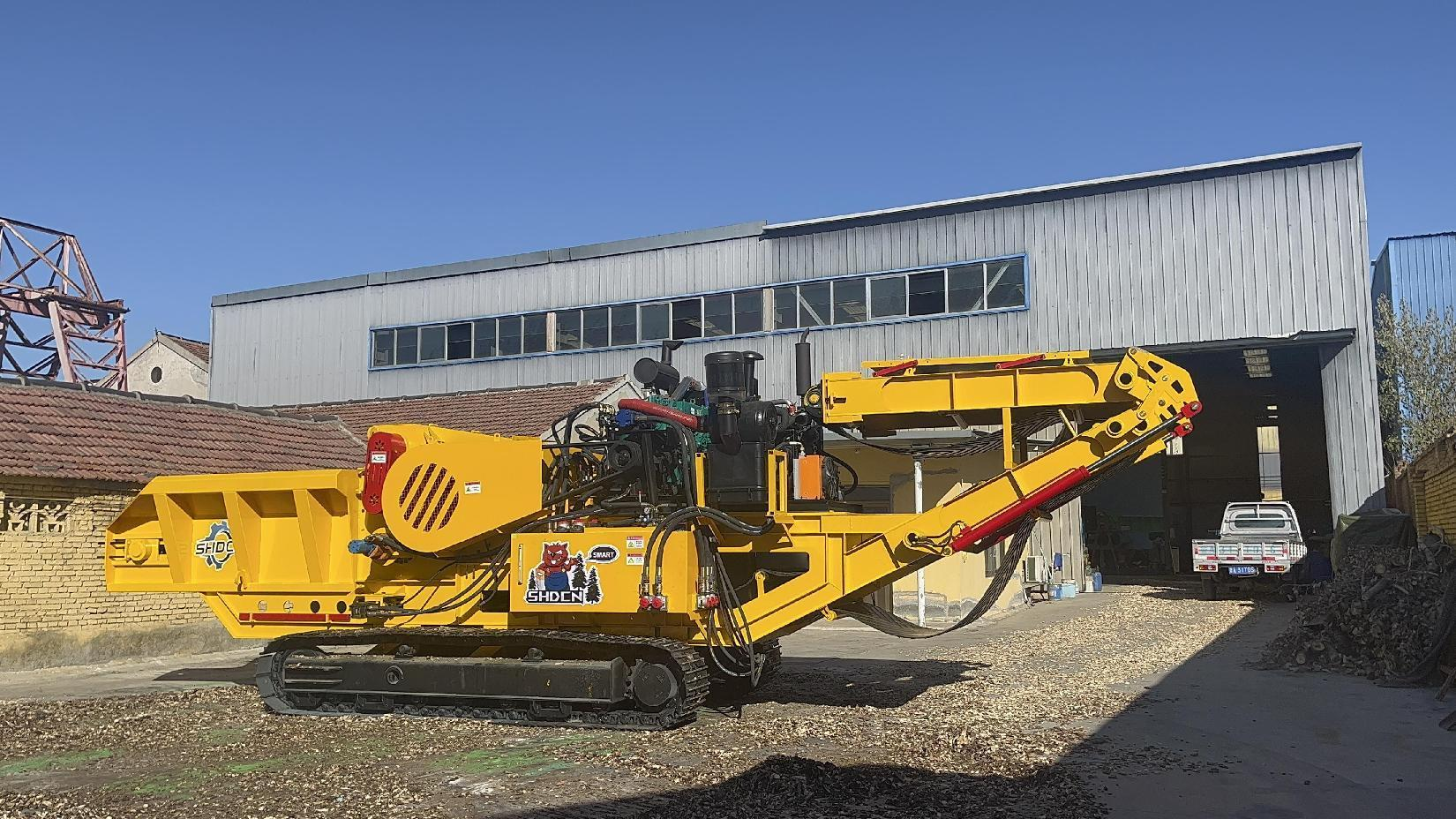
Core Mechanical Differences: Crushing vs. Shredding Action
Working Principle: Impact/Compression Crushing vs. Shearing/Tearing Shredding
Wood crushers work by breaking down material through high energy impacts or compression methods, usually involving rotating hammers or jaws that smash wood along the grain into small granules measuring between 5 to 50 millimeters. What comes out tends to be pretty uniform stuff that works great as fuel for biomass systems, raw material for compost piles, or components in engineered composite products. Shredders take a different approach altogether. They typically use slower moving but powerful rotating shafts equipped with interlocking blades or hooks that pull apart materials against their natural resistance, creating irregular strips or chunky fragments ranging from 20 to 200 mm in size. These larger pieces serve as good starting points before further processing happens. The basic difference matters quite a bit in practice: Crushers apply sudden crushing forces whereas shredders exert continuous tearing pressure. Materials scientists have actually studied these differences extensively looking at how particles look after processing, which confirms what we see happening mechanically during operation.
Torque, Speed, and Force Profiles - How They Define Machine Behavior
Most crushers spin pretty fast, usually between 500 and 3,000 RPM, while applying moderate torque. This setup works great for breaking down dry, brittle materials because it maximizes the impact force needed for effective crushing. But there's a catch – these machines tend to get stuck when dealing with wet or fibrous wood products. That's where shredders come in handy. They run much slower, around 20 to 100 RPM, but pack a lot more torque punch. This allows them to handle all sorts of tough stuff like freshly cut timber, dirty biomass batches, or even construction waste without stopping mid-job. According to industry standards, shredders need about 30 to 50 percent more torque per ton compared to regular crushers when working with materials that vary in consistency or contain different components. This difference makes a big difference when choosing the right machine for specific applications.
- Crushers: Maximize throughput for uniform, pre-screened, low-moisture feedstocks
- Shredders: Prioritize robustness and versatility with unsorted, high-moisture, or contaminated inputs
Output Quality Comparison: Particle Size, Shape, and Uniformity
Granular Crushed Output vs. Fibrous or Blocky Shredded Material
When we crush materials, what we get are pretty much uniform cube-like particles that work really well for things like flowability, packing density, and getting along with automated systems. These properties make crushing ideal for pellet mills, those fluid bed burners, and various composite manufacturing processes. Studies indicate around 85 percent of the wood ends up between 5 and 15 millimeters in size after crushing. On the other hand, shredding tends to produce all sorts of odd shapes and fibrous bits that just don't play nice with automatic feeders and require more hands-on work from operators. The irregular nature isn't so bad though when looking at applications such as garden mulch, compost mixtures needing bulk, or reinforcing fibers in products where exact geometry matters less than having enough material and good surface coverage.
Particle Size Distribution (PSD) Benchmarks per ASTM D5231-22
Consistent PSD directly governs functional performance-especially in thermal, agricultural, or industrial applications. ASTM D5231-22 provides standardized test methodology for wood particulates:
| Characteristic | Crusher Output | Shredder Output |
|---|---|---|
| Uniformity Index | > 0.85 (Narrow distribution) | < 0.60 (Wide variation) |
| Fines Content | 8-12% (Controlled) | 15-30% (Variable) |
| Max. Oversize | 3% of target size | Up to 12% of target size |
High-performance wood crushers achieve >90% compliance with ASTM D5231-22 specifications-reducing waste in pellet production by 17% compared to shredders (Journal of Biomass Standards, 2023). In soil amendment or animal bedding, PSD consistency directly affects absorption kinetics, compaction behavior, and product lifespan. Choose crushing where granulometric precision dictates end-product quality.
Material Compatibility and Real-World Application Fit
Handling Green Wood, Mixed Waste, and Contaminated Biomass
When it comes down to it, material compatibility really determines whether operations will succeed or fail. Green wood with moisture content over 50% isn't much trouble for shredders at all. Their tearing mechanism handles the expansion and flexibility naturally without getting clogged up. Crushers tell a different story though. They often get stuck because the moisture causes things to bind together and makes the wood less brittle. For mixed waste that includes soil, plastic bits, or metal scraps, shredders are clearly better suited. These machines have low speed but high torque which means they can handle non-wood stuff without breaking down completely. Crushers run into problems like deformed hammers, blocked screens, or overloaded bearings. Even contaminated biomass materials like painted wood, chemically treated lumber, or wood with nails still works better through shredders. The hardened cutting teeth on these machines last longer and can take hits from embedded metal pieces. Crusher hammers just wear out faster and produce inconsistent results. We've seen field reports showing around a 30 to 40 percent decrease in actual output whenever the wrong equipment gets paired with certain feedstocks. That's why doing proper assessment before starting any operation remains so important.
How to Choose the Right Equipment: A Practical Selection Framework for Wood Crushers and Shredders
Selecting between wood crushers and shredders hinges on three interdependent criteria: feedstock properties, output requirements, and site constraints.
1. Analyze Feedstock First
Assess moisture content, wood species (softwood vs. hardwood), structural integrity (e.g., laminated vs. solid), and contamination level (nails, paint, soil, plastics). Green or wet wood strongly favors shredders; dry, brittle, clean wood aligns with crusher efficiency.
2. Define Output Specifications Using ASTM D5231-22
Crushers produce narrow-distribution granules (3-15 mm) ideal for pelletizing, fuel briquetting, or thermal applications requiring consistent combustion. Shredders generate broader, fibrous outputs better suited for mulch, compost feedstock, or fiber-based insulation. Match particle geometry-not just size-to your downstream process.
3. Evaluate Operational Context
Consider throughput demands, power availability (electric/diesel), portability, noise restrictions, and maintenance access. Shredders typically support higher-volume operations (10-50 t/h) with greater contaminant resilience; crushers suit moderate-volume (1-10 t/h), precision-focused facilities.
| Factor | Wood Crusher | Wood Shredder |
|---|---|---|
| Throughput Needs | Moderate volume (1-10 t/h) | High volume (10-50 t/h) |
| Output Precision | Narrow particle distribution | Variable strand lengths |
| Contaminant Tolerance | Limited | High (handles nails, soil, plastics) |
Finally, validate assumptions with live material trials-especially for demolition wood, urban wood waste, or reclaimed timber. Real-world feedstock variability rarely matches spec sheets. Prioritize machines offering adjustable discharge settings, modular tooling, and service support aligned with your maintenance capacity.
FAQs
-
What are the main mechanical differences between wood crushers and shredders?
Crushers use high-energy impacts or compression with rotating hammers or jaws, while shredders use slower-moving shafts with interlocking blades for shearing and tearing. -
Which machine is better for handling wet or fibrous wood materials?
Shredders are better suited for wet or fibrous materials due to their higher torque and slower speeds. -
How does particle size distribution affect application suitability?
Particle size distribution affects flowability, packing density, and compatibility with automated systems, impacting the choice between crushers and shredders based on the application. -
What considerations should be made when choosing between wood crushers and shredders?
Consider feedstock properties, output specifications, and operational context, including throughput, power availability, and contaminant tolerance.