
 EN
EN
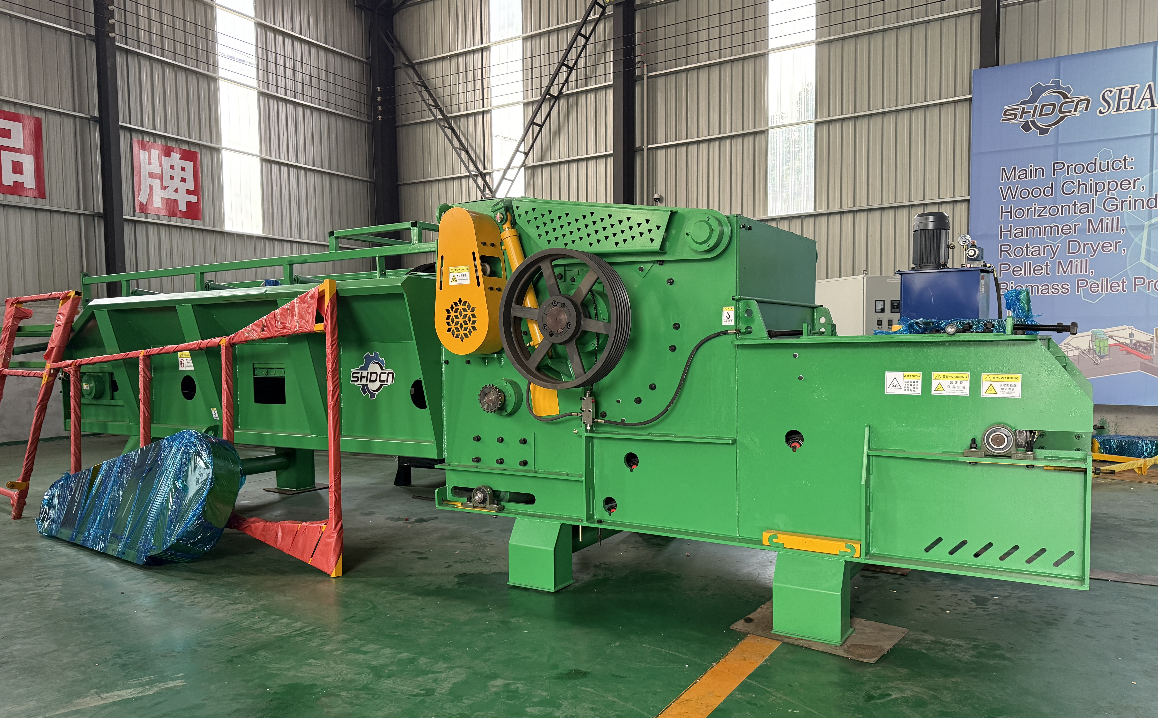
Calculate Your Daily Volume and Translate It into Required Wood Shredder Throughput
Converting yard waste volume (yd³/day) to actionable throughput metrics (tons/hour, yd³/hour)
Getting the right volume to throughput ratio is essential so we don't end up with undersized equipment that can't handle the workload. First thing's first, figure out how much yard waste comes in each day measured in cubic yards. When it comes to converting these volumes into actual weight, there are standard industry numbers to go by. Green wood typically runs around 0.4 tons per cubic yard, whereas chipped material tends to be lighter at about 0.15 tons per cubic yard. Let's say someone deals with 15 cubic yards of green branches every day. That translates to roughly 6 tons worth of material. To find out what kind of hourly processing power is needed, just divide the total daily amount by the number of working hours. If everything needs to get processed within a 4 hour window, then the system should ideally handle at least 1.5 tons per hour. And here's something important from experience - nobody wants their shredder bogged down during busy periods. A good practice is to build in an extra 20% capacity margin to account for those unexpected spikes in volume.
The 20-ton/week inflection point: when commercial wood shredder capacity becomes essential
When dealing with more than 20 tons per week, which works out to about four tons each day, businesses typically need to upgrade from residential to commercial shredding equipment. For smaller operations under this amount, compact shredders handling less than one ton per hour might work fine. But once volumes go beyond that mark, companies will need industrial strength machines capable of processing two tons or more every hour with reinforced parts built to last. Running residential units continuously at these higher volumes wears them down approximately 68 percent faster than normal, leading to significantly increased maintenance expenses totaling around $740,000 over just five years. That's why commercial grade shredders come equipped with heavy duty rotors and special thermal protection systems designed specifically for long term, high capacity operation without breaking down.
Match Wood Shredder Capacity to Feedstock Characteristics and Consistency
How moisture content, density, and contamination affect real-world wood shredder throughput
The amount of moisture in wood really affects how well it gets shredded. Green wood that's around 45 to 60 percent moisture needs about 30 percent more power to process than when it's been properly dried out. When dealing with dense hardwoods such as oak, operators find they need roughly 40 percent more cutting strength than what's required for softer woods, which can cut down on production rates by almost 1.5 tons every hour. Embedded debris like nails or rocks inside the wood is another problem area. These contaminants cause blades to wear down much faster, sometimes up to 70 percent quicker than normal, leading to unexpected machine stoppages and lost productivity time. For anyone running a shredding operation, keeping track of all these factors becomes essential for smooth day-to-day operations.
- Moisture compensation: Add 0.5 tons/hour capacity buffer for every 10% moisture above 30%
- Density adjustments: Multiply baseline throughput by 0.7 for hardwoods over 750 kg/m³
- Contamination protocols: Install magnetic separators when metal content exceeds 5% of feedstock
From green limbs to dry pallets: why feedstock size dictates rotor type and chamber design
The size of the material being processed plays a big role in figuring out how to set up a shredder properly. When dealing with fresh branches larger than 8 inches across, operators typically go for slower rotating machines around 15 to 20 RPM featuring those wedge shaped blades that can actually tear apart tough fibers. Dry wood pallets tell a different story though. These respond better to fast spinning hammer mills running at least 60 RPM which basically blast apart the brittle wood pieces. The chamber itself needs space for whatever sized stuff is coming in. Irregular shaped branches often require special hydraulic feed systems to stop them from getting stuck together inside. But if we're talking about uniform pallet waste, regular conveyor belts usually do the trick just fine. There are several other factors worth keeping in mind when making these decisions too.
| Feedstock Type | Optimal Rotor | Chamber Width | Throughput Impact |
|---|---|---|---|
| Green limbs | Single-shaft | >1.2m | 2–3 tons/hour |
| Pallets | Hammer mill | 0.8–1m | 4–5 tons/hour |
| Mixed waste | Dual-shear | >1.5m | 3–4 tons/hour |
Align Wood Shredder Duty Cycle with Operational Cadence and Staffing
How many staff members are available makes a big difference when setting up an optimal work schedule. When facilities install automated feeding mechanisms along with remote monitoring capabilities, it cuts down on hands-on management requirements. This means a single worker can keep tabs on several machines at once during busy periods. For businesses that don't have enough people on hand though, they often go for basic yet durable equipment that only needs occasional checks but does require regular shutdowns for maintenance. The key thing is matching how long shredders run against what the team can actually handle. Facilities with minimal staffing tend to benefit most from highly automated setups, whereas older style machines with manual feeding need someone specifically assigned to operate them throughout their running time.
Ultimately, synchronizing your wood shredder’s duty cycle with operational hours and staffing prevents costly downtime and extends equipment lifespan.
Select Wood Shredder Output Specifications for Downstream Use and Compliance
Why particle size consistency—and not just throughput—drives final wood shredder selection
Just having high throughput doesn't mean operations are running efficiently. What really matters is keeping particle sizes consistent throughout the process. When materials come out uniform, they perform predictably in different applications. Take biomass boilers for instance these need wood chips no bigger than about two inches to burn properly. Pellet mills work best when fed pieces smaller than quarter inch fragments so the compression holds together. The problem comes when sizes vary too much. We've seen some facilities lose nearly a third of their material during recycling because it doesn't meet size requirements. Plus, inconsistent particles wear down conveyor belts faster than anyone wants to deal with, especially during busy production periods.
| Application | Ideal Particle Size | Inconsistency Impact |
|---|---|---|
| Biomass energy | 1–2" chips | Combustion inefficiency (+15% fuel waste) |
| Mulch production | 0.5–1.5" shreds | Uneven decomposition |
| Composite manufacturing | <0.25" particles | Structural defects in boards |
Advanced shredders achieve consistency through adjustable screen cartridges and moisture-sensing rotors that auto-calibrate cutting force—critical when processing variable materials like green limbs (45–60% moisture) versus dry pallets. This precision prevents costly reprocessing and ensures 95%+ material utilization in circular economy workflows.
FAQ
What is the ideal wood shredder capacity for processing green branches?
When dealing with 15 cubic yards of green branches daily, ideally a shredder should handle about 1.5 tons per hour, with a 20% capacity cushion.
When should a business upgrade to commercial shredding equipment?
Once you exceed 20 tons per week, or approximately four tons per day, consider upgrading from residential to commercial shredding equipment to handle larger volumes efficiently.
How does wood moisture content affect shredding efficiency?
Higher moisture content in wood increases the power required for shredding, with green wood around 45-60% moisture requiring 30% more power compared to properly dried wood.
What factors affect shredder throughput when processing hardwoods?
Dense hardwoods over 750 kg/m³ need about 40% more cutting strength than softer woods, reducing production rates by 1.5 tons/hour on average.
Why is particle size consistency important in wood shredding?
Uniform particle size ensures predictable performance in applications like biomass boilers or pellet mills, while minimizing material loss and wear on equipment.
Table of Contents
- Calculate Your Daily Volume and Translate It into Required Wood Shredder Throughput
- Match Wood Shredder Capacity to Feedstock Characteristics and Consistency
- Align Wood Shredder Duty Cycle with Operational Cadence and Staffing
- Select Wood Shredder Output Specifications for Downstream Use and Compliance
-
FAQ
- What is the ideal wood shredder capacity for processing green branches?
- When should a business upgrade to commercial shredding equipment?
- How does wood moisture content affect shredding efficiency?
- What factors affect shredder throughput when processing hardwoods?
- Why is particle size consistency important in wood shredding?